

I have a good friend who has been active in helping young people enter the workforce successfully and she is really worried about the impact that AI will have on jobs for young people. I think it’s time that we focus just as much attention on how AI can help young people create jobs.
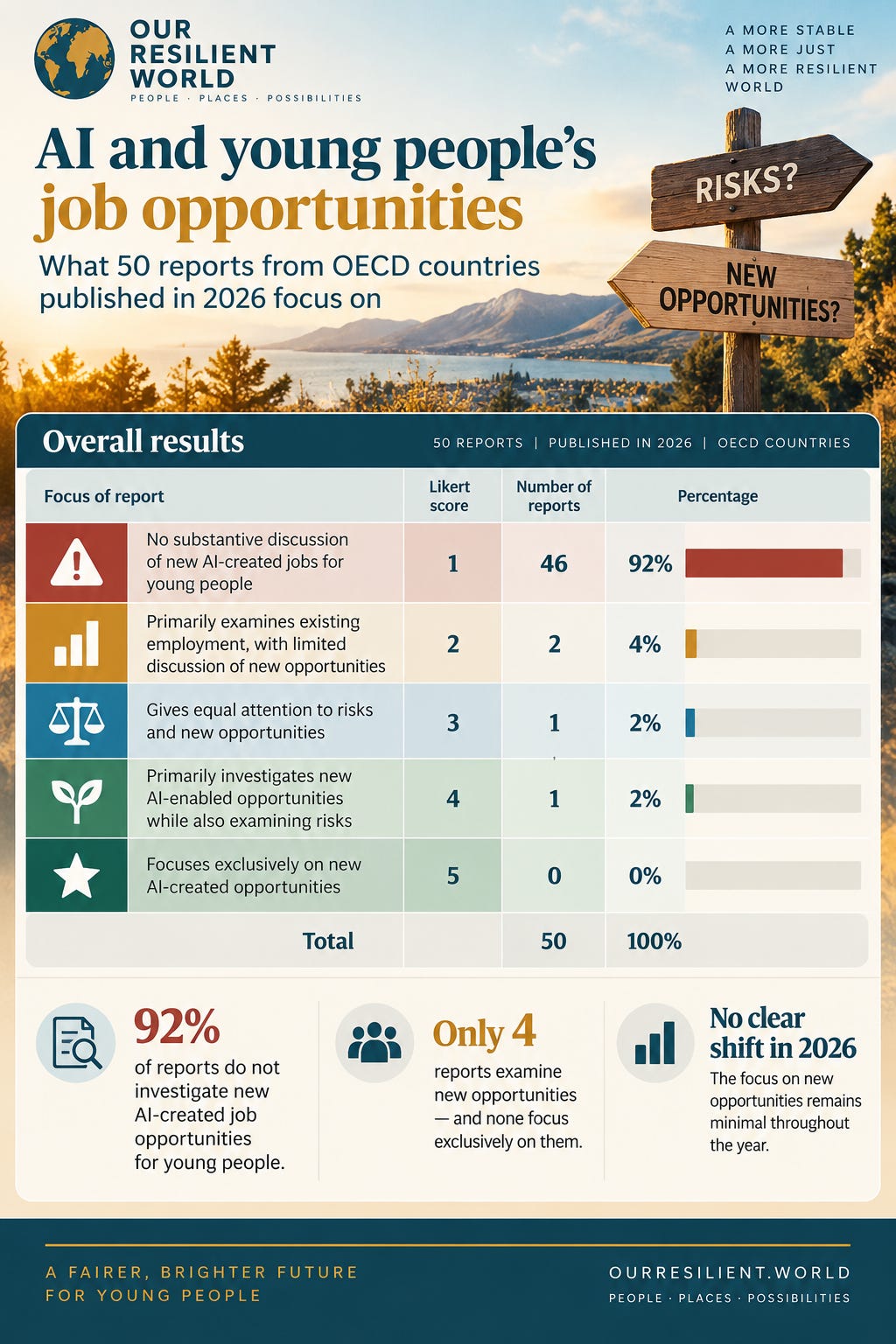
It is always useful to start with some evidence. My premise is that most of the major reports that have been recently released in 2026 focus on the impact of AI on job opportunities for young people, with very few focusing on how we could help young people get jobs.
A ChatGPT-assisted review of 50 publications from across OECD countries found that 92% did not examine how AI could help young people find or create jobs. The results are shown below, and the supporting research is available to download.

When might AI seriously impact job opportunities?
There is no definite answer. Economic history has shown that technological innovation results in huge losses of a whole class of jobs, while new classes of jobs are created.
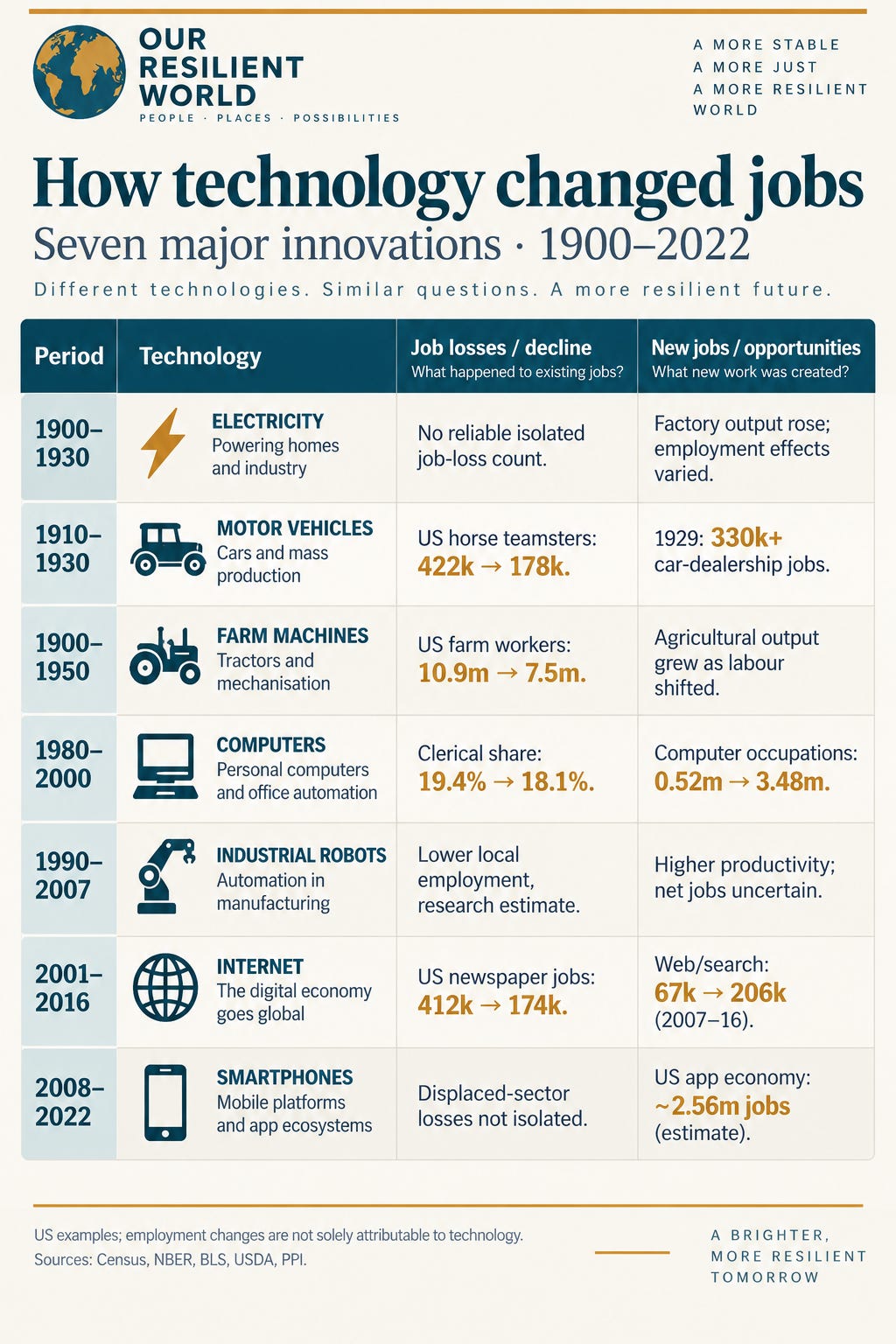
Each major technology innovation has regularly eliminated established jobs and at the same time created new categories of work. The transition always leaves some people behind and can hollow out whole sectors and communities. The belief in free trade is no longer viable in a world dominated by the US and China, both determined to exercise their power. We all have to move on and focus on building resilient systems. Providing real options to older people who are most at risk in the AI transition should be a priority for everyone.
AI opens opportunities for young people who begin to avoid occupations that they expect to disappear. Young people are the most adaptable and the most able to anticipate and switch career paths. If the AI technology revolution follows the same path as previous innovation then young people are the ones most likely to adapt.
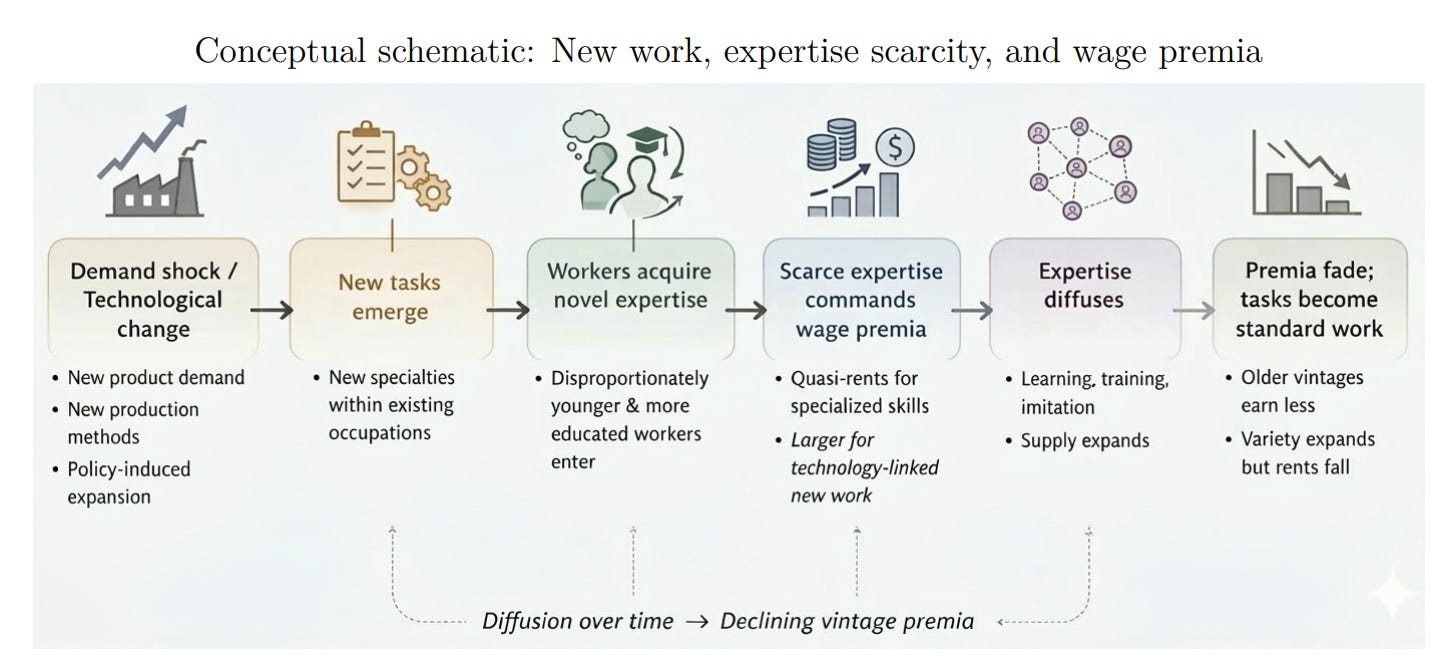
“… compared to preexisting work, new work is disproportionately performed by younger, more educated workers, both across and within occupations, consistent with new work requiring investments in new skills.”
- What Makes New Work Different from More Work? MIT paper March, 2026
Will this time be different?
In the short term, the answer is clearly no, especially in countries like Australia which has almost zero labour productivity growth over the last five years.
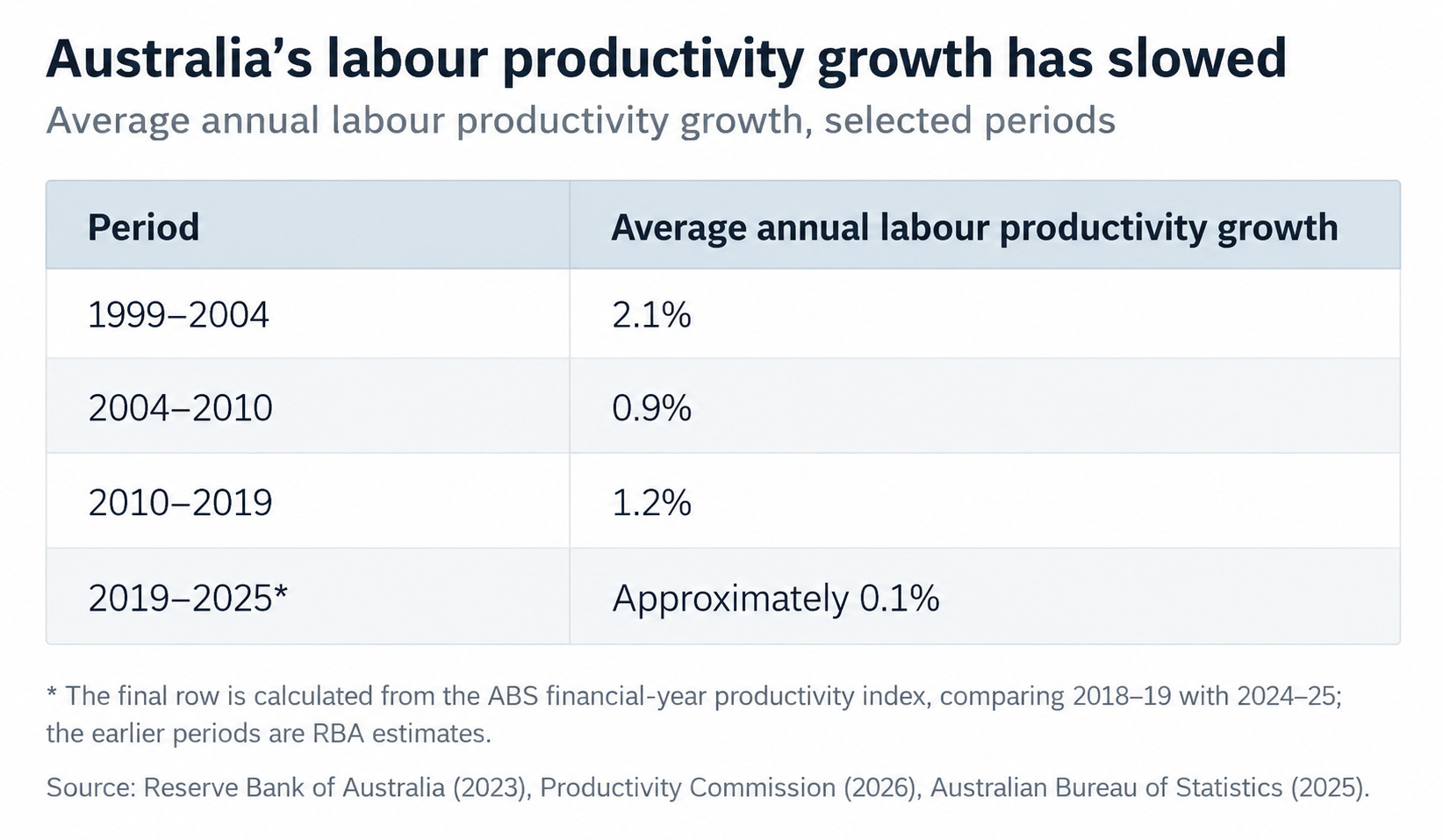
The situation is even worse for average annual capital productivity growth over the period 2019-2025 - approximately 0.0 % per year.
From - Australian Government Productivity Commission, Annual productivity bulletin, 2026
The AI Opportunity
Humans seem wired to see risks far more than opportunities. This may help explain a striking gap in the research: while some reports discuss potential opportunities, none of the 50 publications reviewed focused specifically on practical ways to help young people find or create entirely new kinds of work.

For those who care about young people and their ability to get work, my advice is do not stress over the loss of traditional job opportunities. Focus instead on what can be done to help young people identify and create new ways of working.
Stop worrying about higher education which will continue to provide training and qualifications for the ‘old jobs’. Focus on ways to help young people find and create new work. This is where the growth opportunities are. Remember that when computer programming became ‘new work’, most programmers did not have a university degree. Most good programmers had started learning in their teens, if not earlier and learnt with their friends, not from school or University.
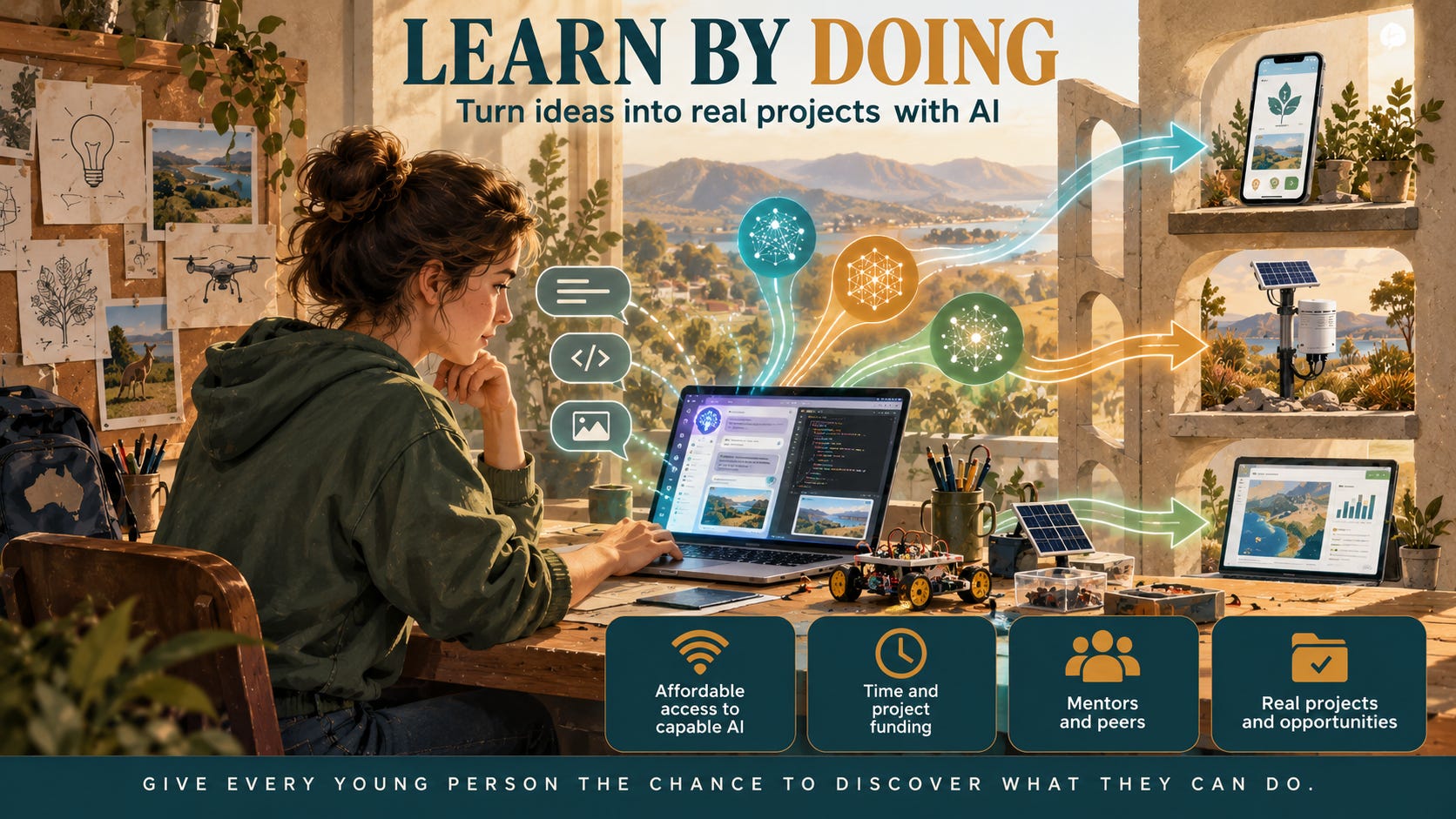
Make access to the latest AI models affordable for young people. Focus on providing them with free compute, Set up competitions that encourage them to find creative ways to innovate using AI.
If you live outside the US and China, understand that the most effective answer to helping young people find work is to focus all relevant government policy on increasing labor productivity and ensuring that businesses invest heavily in using AI to be more productive.
Looking further ahead when the combination of AI and robotics really starts shrinking job opportunities, move to a four day working week without reducing pay and provide incentives to both individuals and organisations to increase labor productivity.
We cannot prevent AI from changing the world of work. But we can help young people become the creators of new opportunities rather than simply the victims of disappearing jobs.
We are all responsible for how AI impacts our societies. Remember that we are much more likely to see risks than opportunities. Work with others to make sure that young people are able to experiment and play with the opportunities that AI creates. Do not rely on our governments - we are all responsible.
Further reading: How AI may change job opportunities
Our Resilient World has published a series of research reports examining whether AI and robotics will eliminate jobs, transform existing work, or create new employment and business opportunities.
The research examines the implications for people entering or re-entering the workforce, including young people.
1. Can AI create new jobs and businesses?
AI could make it easier for individuals to start businesses or become self-employed by reducing the cost of accessing skills and technology.
Key finding: New opportunities are plausible, but there is insufficient evidence to establish how many sustainable jobs AI will create, who will benefit, or whether these opportunities will provide reliable incomes.
2. Will AI create more jobs than it eliminates?
AI is changing existing occupations and the skills employers require. Education, retraining and targeted assistance may help workers adapt.
Key finding: There is insufficient Australian evidence to determine whether AI-enabled job creation will outweigh job losses or whether newly created jobs will offer comparable employment conditions and incomes.
3. Will AI-created jobs survive a major economic crisis?
New AI-enabled businesses may depend on computing infrastructure, international technology suppliers and continued investment.
Key finding: Economic or geopolitical disruptions could threaten these businesses. There is insufficient evidence that AI-created employment would remain sustainable during a prolonged economic crisis.
4. An individual’s AI opportunity — September 2026
This report explores providing Australians aged 16 and over with publicly funded access to AI tools, enabling individuals to learn new skills, experiment and potentially establish businesses independently of employers and educational institutions.
Key finding: Universal access to AI could help individuals adapt to technological disruption and develop new opportunities. However, this remains a proposal rather than a demonstrated solution.
Research Summary
AI offers young people new opportunities, but there is not yet sufficient evidence that these will compensate for jobs lost or transformed by AI.